File 05 · The Scandal
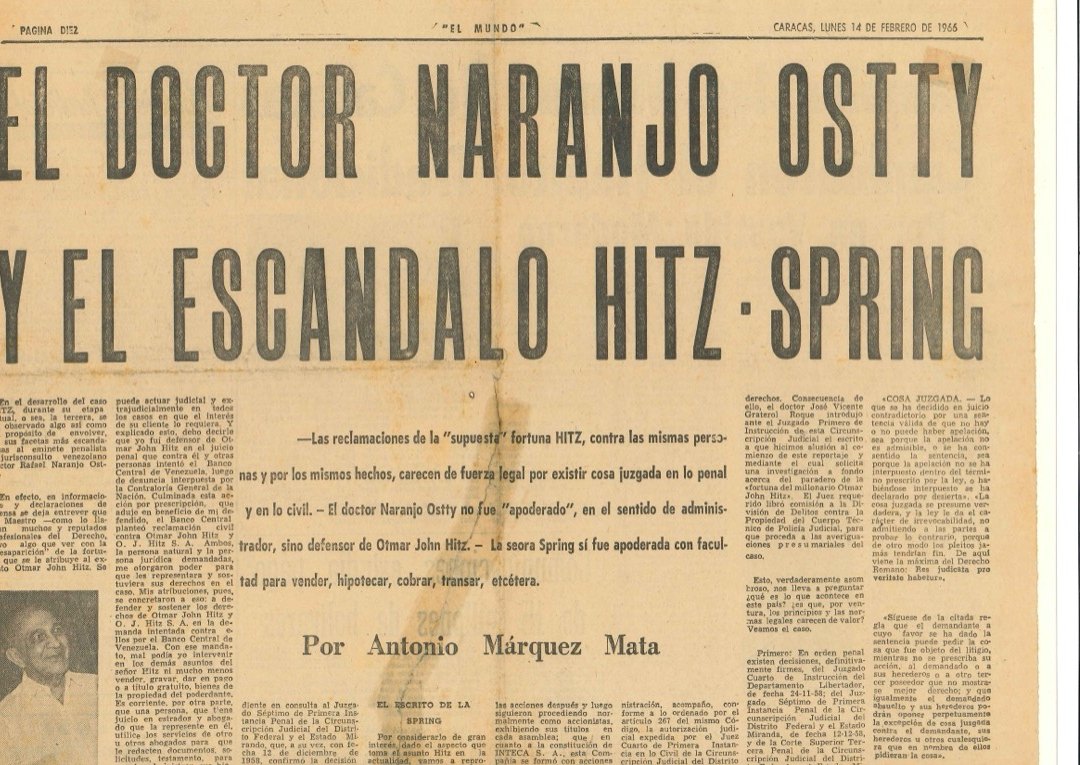
By 1966 the love story was a corruption story. At the Caracas judicial police, the Hitz estate became a circus that the papers covered like a telenovela, except the money was real and the stakes were a family's whole future.
The cast that moved through those halls in a single week tells you everything about what the fortune had become.
- The jewels Left to the heiress and worth seventy thousand bolivars, they were pawned for sixteen thousand. La Verdad drew the line that would define the case: they were “not stolen but seized.” Whoever took them claimed the right to.
- The bearer shares Company shares that belong to whoever physically holds the paper. One lawyer used the ones in his hand to declare himself president of the dead man's companies.
- The detective An Argentine private investigator walked into the police station carrying Othmar Hitz's personal diary, kept in his own hand since 1922, and handed it to the police rather than the family.
- The mistress She had claimed for years to be the daughter of a former president. Asked whether the investigation worried her, she laughed: it did not stop her “from eating even a grain of rice nor deprive me of five minutes of sleep.”
The millionaires and the beggar
Outside police headquarters, a photographer caught the heiress and her husband as a beggar stopped to ask what the crowd was for. Told the young couple was about to inherit a fortune, he said the line the paper printed under the picture.
The Millionaires and the Beggar. THEY: 30 million. HE: One coin.
Caption, as published · Caracas, January 1966
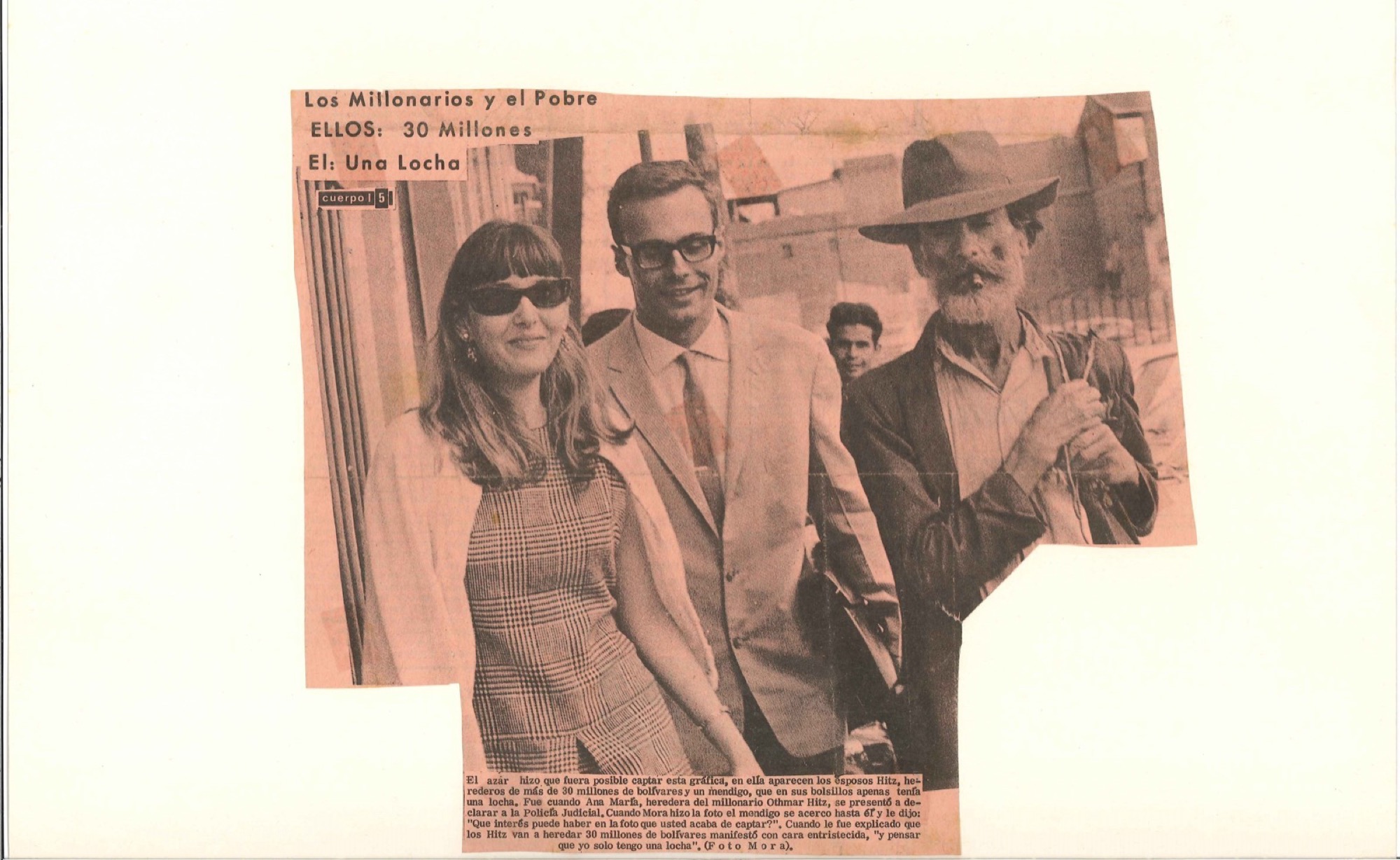
It took the family sixty years to see the real joke in that caption. The beggar and the heiress were in the same position. Each had exactly what was in their hands. The only difference was that the beggar knew it.
What the archive adds
Sixty years on, the family had the Caracas pages read in full, and two findings belong in this file beside the circus.
The widow went to prison in the same weeks. A la Cárcel la Viuda de Hitz, a Caracas daily headlined, reporting the defamation action Lina Rosa Fuentes had brought against her, and Últimas Noticias reported that the plaintiff's side sought thirty months. Led into the women's prison, the widow gave the reporters one sentence: “Jesús sufrió sin pecar. Gente que no ha sufrido no vale nada en la vida.” Jesus suffered without sinning; people who have not suffered are worth nothing in life.
And the heiress asked the court to count everything. A Caracas daily reported that the Fifth Civil Judge ordered an inventory of the estate at her own request, and La República of 26 January 1966 printed her formal words from the day before: she would accept her father's estate only under benefit of inventory. A person trying to hide an estate does not petition a judge for an itemised count of it.
This is where the public record ends. The papers had their scandal, and they moved on. What they never printed, whether Othmar Hitz was murdered, who really took the fortune, and whether any of it is still in a Swiss bank, the family spent the rest of their lives uncovering. That story is not in the newspapers. It is in the sealed file.
Continue the case file · File 06
For sixty years the family asked where the money went. In January 1966 three Caracas papers printed the method, and one of them printed the name it was hidden under.
Continue →